Feminism 101: A Complete Beginner’s Guide to the History, Waves, and Ideas Behind the Movement
If you have ever heard the words “first wave” or “intersectionality” thrown around in a classroom or on social media and felt a little lost, you are not alone. Feminism is one of the most influential intellectual and political movements of the last three centuries, yet it is often talked about as if everyone already understands its history. This article is designed to change that. Think of it as your starting point — a clear, simple, and academically grounded map of how feminism began, how it evolved through different “waves,” and what ideas continue to shape it today.
What Is Feminism, Really?
At its core, feminism is the belief that people of all genders deserve equal rights, opportunities, and dignity. It is both a political movement and a body of theory. As philosopher and activist bell hooks put it, feminism is, in her own words, simply a movement to end sexist oppression. That definition is intentionally broad, because feminism has never been one single idea — it has always been a conversation, often a heated one, between people who agree on the goal of equality but disagree on how to get there.
This is exactly why literature and philosophy students find feminism so rich to study. It is not a fixed doctrine like a mathematical formula. It is closer to a long-running philosophical debate, with each generation responding to, building on, and sometimes rejecting the ideas of the one before it.
The Seeds Before the Storm: Feminist Thought Before the “Waves”
Long before anyone used the word “feminism,” women were writing and arguing for their rights. During the European Enlightenment, when philosophers like John Locke and Jean-Jacques Rousseau were writing about liberty and reason, a few bold women asked an obvious question: why does this freedom not apply to us?
The English writer Mary Wollstonecraft answered that question in her 1792 book “A Vindication of the Rights of Woman.” She argued that women were not naturally inferior to men; they simply lacked access to education. Around the same time in France, Olympe de Gouges wrote the “Declaration of the Rights of Woman and the Female Citizen,” directly challenging the French Revolution’s promise of liberty for “all men” while excluding women.
These writers did not call themselves feminists — the term did not exist yet — but they planted the philosophical seeds that would later grow into an organized movement.
The First Wave of Feminism (Mid-1800s to 1920s): The Fight for the Vote
The “first wave” of feminism is usually traced to the Seneca Falls Convention of 1848 in the United States, where activists like Elizabeth Cady Stanton and Lucretia Mott gathered to demand legal and political rights for women, most famously the right to vote.
This wave was largely focused on formal, legal equality. Women could not vote, could not own property in their own name in many places, and were often barred from higher education and most professions. Susan B. Anthony in the United States and Emmeline Pankhurst in Britain became leading voices, organizing protests, hunger strikes, and public campaigns.
The first wave eventually succeeded in winning women the right to vote in many countries — the United States in 1920, Britain in stages between 1918 and 1928. But it is important for students to notice a limitation that scholars often highlight: this wave was largely led by white, middle-class women, and many women of colour and working-class women were excluded from its victories in practice, even when laws changed on paper.
The Second Wave of Feminism (1960s to 1980s): Beyond the Ballot Box
If the first wave asked for a seat at the political table, the second wave asked a deeper question: what about everyday life? This wave expanded feminism beyond voting rights into areas like the workplace, sexuality, the family, and reproductive rights.
Two books are essential reading here. French philosopher Simone de Beauvoir’s 1949 work “The Second Sex” introduced the now-famous idea that gender is not purely biological but constructed by society. Her line that one is not born, but rather becomes, a woman remains one of the most quoted sentences in feminist philosophy. It suggested that femininity is something learned and performed, not something fixed by nature.
In the United States, Betty Friedan’s 1963 book “The Feminine Mystique” gave language to what she called “the problem that has no name” — the quiet dissatisfaction felt by many housewives whose lives were limited to domestic duties despite education and ambition. This book is often credited with reigniting feminist activism in America.
The second wave also pushed for reproductive rights, including access to contraception and the legalisation of abortion, equal pay legislation, and protection against domestic violence and workplace harassment. It was during this period that the phrase “the personal is political” became a rallying cry, meaning that private experiences like housework, childcare, and sexuality were not simply personal choices but shaped by political and social structures.
However, like the first wave, the second wave faced strong criticism for centering the experiences of white, heterosexual, middle-class women, often ignoring the different struggles faced by Black women, working-class women, and women in the Global South.
The Third Wave of Feminism (1990s to 2000s): Many Feminisms, Many Voices
The third wave emerged partly as a response to those very criticisms. It rejected the idea that there is a single, universal “woman’s experience” and instead embraced diversity, individuality, and contradiction.
A landmark concept here is intersectionality, a term coined by legal scholar Kimberlé Crenshaw in 1989. Crenshaw argued that categories like race, gender, and class do not operate separately but intersect, creating overlapping forms of discrimination. For example, a Black woman might face forms of discrimination that are neither purely about race nor purely about gender, but a unique combination of both. This idea transformed feminist theory and remains central to how scholars discuss identity today.
The third wave was also shaped by pop culture, music, and reclaiming things earlier feminists had rejected, such as makeup, fashion, and even certain forms of sexuality, as personal expressions of choice rather than signs of oppression. The “Riot Grrrl” punk music movement of the early 1990s is a good literary and cultural example of this energy — raw, rebellious, and unwilling to follow a single script of what feminism should look like.
Writers like bell hooks continued to push feminism toward inclusivity, insisting that the movement must address race and class alongside gender if it wanted to be truly liberating for all women, not just some.
The Fourth Wave of Feminism (2010s to Present): Feminism Goes Digital
Many scholars now describe a fourth wave, closely tied to the rise of social media and digital activism. The #MeToo movement, which gained global momentum in 2017 after public accusations against film producer Harvey Weinstein, is often cited as a defining moment of this wave. Survivors used hashtags and online platforms to share experiences of sexual harassment and assault on a scale that would have been impossible before the internet.
This wave is marked by a few clear features: it is global and instantly connected, it pays close attention to transgender rights and gender as a spectrum rather than a binary, and it continues to deepen intersectional analysis by including disability, immigration status, and global inequality in its scope.
Philosopher Judith Butler’s work on gender performativity, especially in her 1990 book “Gender Trouble,” remains highly influential here. Butler argued that gender is not something we simply have, but something we continuously do through repeated social actions — a theory that underpins much of today’s discussion around gender identity.
The Main Schools of Feminist Thought
For literature and philosophy students, it helps to understand that feminism is not only a historical timeline but also a set of competing theoretical positions. A few major schools are worth knowing:
Liberal feminism focuses on achieving equality through legal and political reform — equal pay laws, anti-discrimination policy, and equal access to education. Mary Wollstonecraft and Betty Friedan are often associated with this tradition.
Radical feminism argues that the root cause of women’s oppression is the patriarchal structure of society itself, not just unfair laws, and that deeper, structural change is required.
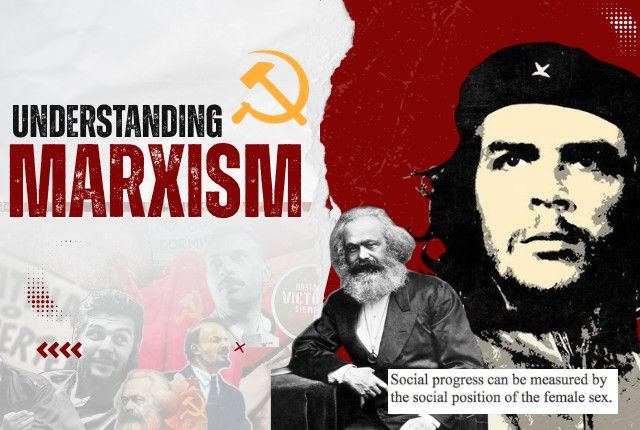
Socialist or Marxist feminism connects women’s oppression to economic systems, particularly capitalism, arguing that class and gender exploitation are deeply linked.
Intersectional feminism, building on Kimberlé Crenshaw’s work, insists that gender cannot be understood in isolation from race, class, sexuality, and other forms of identity.
Postmodern feminism, influenced by thinkers like Judith Butler, questions fixed categories of “woman” and “man” altogether, treating gender as fluid and socially constructed rather than biologically determined.
Knowing these schools helps explain why feminists sometimes disagree passionately with one another — they are often working from different philosophical starting points, even while sharing the broader goal of equality.
Why the “Wave” Metaphor Is Debated Among Scholars
It is worth noting, for the sake of academic honesty, that many scholars are critical of the wave metaphor itself. Critics argue that dividing feminism into neat waves makes the movement appear more organized and linear than it actually was, and risks erasing the contributions of women of colour, working-class women, and activists in non-Western countries who were active throughout every period, even when their work was not labelled “feminist” at the time. Understanding this critique is itself part of a strong academic foundation, because it teaches students to question historical narratives rather than accept them passively.
Why Studying Feminism 101 Still Matters Today
Feminism is not a finished project frozen in history books. The gender pay gap still exists in most countries. Reproductive rights remain a contested legal battleground in many parts of the world. Women continue to be underrepresented in politics, corporate leadership, and academic philosophy itself. Understanding the history and theory behind feminism gives students the tools to critically analyse these ongoing issues rather than simply reacting to headlines.
For students of literature and philosophy in particular, feminist theory offers a powerful lens. It can change how you read a nineteenth-century novel, how you interpret a philosophical text on liberty and rights, or how you understand a contemporary film. Once you understand the waves and the theories behind them, you start noticing feminist questions everywhere — in language, in law, in art, and in everyday life.
Common Questions About Feminism, Answered Simply
Is feminism only for women? No. Feminism argues for equality between all genders, and many men have historically supported and participated in feminist movements.
What is the difference between equality and equity in feminism? Equality means treating everyone the same, while equity means recognising that different groups may need different kinds of support to reach the same outcome, due to historical disadvantage.
Do all feminists agree with each other? Not at all. As shown by the different schools of thought above, feminists often disagree strongly on strategy, theory, and priorities, even while sharing the same broad goal.
Is feminism a Western idea? While the term originated in the West, women’s rights movements have existed independently across the world, including in South Asia, Africa, and Latin America, often shaped by local histories and struggles rather than imported directly from Europe or America.
Feminism, in the end, is less a single story with a clear ending and more an ongoing conversation across centuries — one that every new student joins the moment they start asking why things are the way they are, and whether they could be otherwise.