Hegemony 101: Understanding Power, Consent, and Culture from Ancient Greece to the Digital Age
Hegemony is one of those words that sounds complicated but describes something we all experience every day. At its simplest, hegemony means a kind of dominance that does not rely only on force. It is power that has learned to feel normal. When one group, class, or nation leads others not just through laws or armies but through ideas, habits, and “common sense,” that is hegemony at work. Understanding this concept gives literature and philosophy students one of the most useful tools available for reading texts, history, and even social media.
Where the Word Comes From
The word hegemony comes from the ancient Greek term hegemonia, meaning leadership or guidance. In classical Greece, it described the position of a dominant city-state, such as Athens or Sparta, leading an alliance of smaller states. The historian Thucydides used the idea to describe how Athens led the Delian League, a position built on military strength but also on the willingness of allied states to accept that leadership. Even in its earliest form, hegemony was different from simple conquest. It involved some degree of recognition, cooperation, or consent from those being led, even if that consent was shaped by fear or dependence.
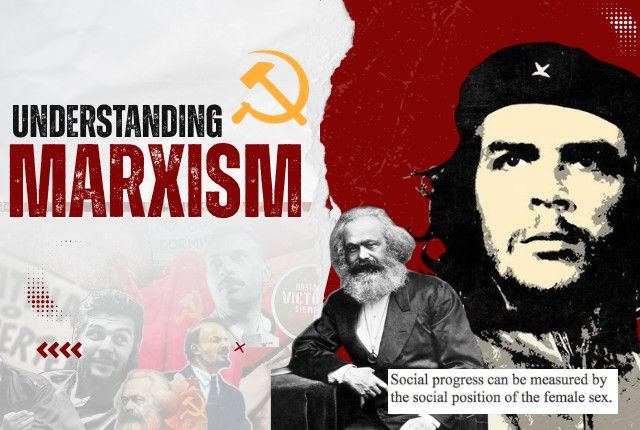
For centuries, the term stayed mostly within the vocabulary of historians and political theorists discussing relationships between states. Karl Marx did not use the word extensively, but his broader theory of ideology, the idea that the ruling class produces the dominant ideas of an era, planted the seeds for what hegemony would later become. Vladimir Lenin later used the term to describe the leadership role the working class needed to take over allied groups during revolutionary struggle. But the concept as we understand it today, rich, cultural, and psychological, comes from one thinker writing in a fascist prison cell.
Antonio Gramsci and the Birth of Cultural Hegemony
Antonio Gramsci, an Italian Marxist philosopher, was imprisoned by Mussolini’s regime in 1926. During his years in prison, he filled notebooks with reflections that would later be published as the Prison Notebooks. It was here that Gramsci transformed hegemony from a term about military alliances into one of the most influential ideas in modern social thought.
Gramsci asked a question that troubled many Marxists of his time: if capitalism creates such inequality and suffering, why do working people so rarely revolt against it? His answer was that ruling classes do not maintain power through force alone. They maintain it by shaping the common sense of a society, the unquestioned assumptions about what is normal, natural, fair, or simply “the way things are.” Gramsci argued that real power works through a combination of coercion, meaning laws, police, and institutions, and consent, meaning the willing agreement of ordinary people who absorb the dominant worldview as their own.
This is the heart of cultural hegemony. Gramsci located the battlefield for this consent in what he called civil society, the space of schools, churches, media, family life, and popular culture, as opposed to the state itself. He distinguished between traditional intellectuals, who serve existing institutions like universities or the church, and organic intellectuals, who emerge from and represent the interests of a particular social class, helping to either reinforce or challenge the dominant order. He also introduced the idea of a historical bloc, an alliance of social groups and ideas that holds power together at a given moment, and described two kinds of political struggle: a war of maneuver, a direct confrontation with state power, and a war of position, a slower struggle fought through culture, education, and institutions to win the battle of ideas before any direct confrontation happens.
A simple example makes this clearer. A worker who believes that hard work alone determines success, even when evidence shows that birth, wealth, and luck matter enormously, has absorbed a piece of hegemonic common sense. That belief did not arrive through a court order or a police command. It arrived through schooling, advertising, films, and everyday conversation, all of which quietly reinforced an idea that benefits those already in power.
How the Idea Traveled After Gramsci
Gramsci’s notebooks were not widely translated and read until decades after his death in 1937, but once they reached a global audience, the concept of cultural hegemony spread rapidly across disciplines.
The French philosopher Louis Althusser built on this work with his theory of ideological state apparatuses, institutions like schools, media, and religion that reproduce dominant ideology without needing direct force, working alongside what he called repressive state apparatuses such as police and the military.
In Britain, the Birmingham School of cultural studies, particularly the work of Stuart Hall, applied Gramsci’s ideas directly to media and popular culture. Hall examined how television news, advertising, and entertainment shape what audiences accept as reality, showing that media does not simply reflect society but actively participates in constructing hegemonic common sense. The literary critic Raymond Williams contributed the related idea of structures of feeling, the way dominant culture shapes not just thoughts but emotional responses, taste, and what feels instinctively right or wrong.
Postcolonial theory found Gramsci’s framework especially powerful. Edward Said’s landmark work Orientalism used hegemony to explain how Western powers maintained colonial dominance not only through soldiers and administrators but through scholarship, literature, and art that constructed the East as exotic, irrational, and inferior, making colonial rule appear natural and even beneficial. Gayatri Spivak and the Subaltern Studies Collective, including historian Ranajit Guha, extended this further, examining how colonized and marginalized groups, the subalterns, were denied a voice within hegemonic systems of knowledge and representation.
The concept also entered gender studies through sociologist Raewyn Connell, who coined the term hegemonic masculinity to describe the dominant model of manhood in a given culture, one that is held up as ideal even though most men do not actually live up to it, and that maintains its power partly by making alternative ways of being a man seem deviant or lesser.
Meanwhile, political theorists Ernesto Laclau and Chantal Mouffe pushed hegemony theory in a new direction in their influential book on socialist strategy. They argued that hegemony is not tied to fixed economic classes as Marx assumed, but is constructed through language and discourse, meaning political identities and alliances are built and rebuilt through ongoing struggles over meaning rather than determined purely by economic position.
Hegemony in Global Politics and Everyday Life Today
The concept also matured within international relations. Scholars like Robert Cox distinguished between simple dominance, one nation forcing its will on others, and true hegemony, where a leading power’s institutions, values, and economic model become so widely accepted that other nations adopt them voluntarily, believing it serves their own interests. This lens has been used to analyze periods like Pax Britannica in the nineteenth century and the postwar dominance of the United States, sometimes called Pax Americana, where American culture, currency, and institutions became the default framework for much of the global order.
In daily life, examples of hegemony are everywhere once you start looking. The global spread of English as the default language of business, science, and the internet is a hegemonic process, since it did not happen through any single law but through generations of economic and cultural influence that made English feel like the “natural” choice. The widespread, often unquestioned assumption that free-market capitalism is simply how economies must work, rather than one historically specific arrangement among many possible ones, is a textbook case of common sense doing the work that force once did. Social media platforms now play a similar role to the media institutions Stuart Hall studied, with algorithms quietly shaping which ideas, images, and voices feel normal and worth attention, often reinforcing existing hegemonic patterns of taste and belief on a massive scale. The related idea of manufacturing consent, a phrase developed by journalist Walter Lippmann and later used by linguist Noam Chomsky and economist Edward Herman, describes how modern media systems can produce public agreement with policies or worldviews that serve concentrated power, echoing Gramsci’s insight from nearly a century earlier.
Why This Concept Still Matters
Hegemony offers a way of reading beneath the surface of texts, institutions, and everyday speech. A novel’s quiet assumptions about gender, a textbook’s silence about certain histories, or an advertisement’s vision of a happy family are never just neutral content. They are small pieces of a much larger struggle over what counts as common sense in a given society. Gramsci’s central insight remains as relevant now as it was in his prison cell: power that has to constantly use force is fragile, but power that has convinced people to want it is nearly invisible, and far harder to question. Learning to see that invisible architecture is the real starting point for any serious study of culture, politics, or ideas.