Politics of the Bindi: A Critical Analysis of the Aesthetic Dot
The bindi/teep/bottu, a small (or big), seemingly insignificant dot on the forehead, is a heavily political cultural artefact. Despite its aesthetic beauty, it speaks for Hegemony and maintains Ideologies. Although I’m all for wearing a bindi. A severely political statement, right? Let’s start from the basics, i.e., the history. (I mean, if the “basic” is only his-story… the bar is in hell). Moving on.
(I will be using the word teep throughout the length of this essay, primarily because I don’t belong to the words bindi or bottu due to the location of my upbringing.)
A teep is a decorative dot or circular mark traditionally worn on the forehead, specifically between the eyebrows, by women in South Asia. In India, it carries deep cultural, religious, and symbolic significance, especially in Hinduism. Historically, the teep is made from vermillion (sindoor or kumkum) and is often red, symbolising marriage, love, and fertility. Married women used to wear it as a sign of their marital status. But, in some regions, women of all ages and regardless of their marital statuses may wear it as part of their everyday attire. The placement of the teep between the eyebrows is essential as it is believed to represent the “third eye” or Ajna chakra, a significant spiritual point in Hindu belief that embodies intuition, wisdom, and spiritual enlightenment. The teep is thought to focus energy and protect against negative forces, making it a cultural marker and a spiritual tool. In contemporary times, the teep has moved beyond its traditional role, becoming a popular fashion accessory. This evolution reflects both the globalisation of Indian culture and the changing roles of women in society. The teep has been embraced as a fashion statement by women globally. While the red teep symbolises tradition, its modern use blends heritage with contemporary fashion, showcasing the dynamic nature of cultural symbols.
As mentioned earlier, teep is a political-cultural artefact. It is inherently political in nature. The teep holds considerable political significance when viewed through the perspectives of religion, gender, hegemony, and ideology. It is not just a decorative item; instead, the teep plays a role within broader power and control systems, mirroring and reinforcing societal norms and cultural hierarchies. The theories of thinkers like Antonio Gramsci and Louis Althusser on hegemony and ideology offer an interpretation of how the teep operates within these power structures, especially considering the cultural supremacy of Hinduism, traditional gender roles, and the formation of nationalist identities. Let us look at the different elements through which the teep manifests politicism in the real world.
Teep as a tool of Cultural Hegemony
The teep has historically been significant in Hindu religious practices, symbolising spirituality, marital status, and femininity. The traditional red teep is mainly linked to the Hindu goddess Shakti, embodying female energy and power. Beyond its religious meaning, the teep also symbolises Hindu “identity”, influencing the broader dynamics of religious dominance.

Antonio Gramsci’s theory of Hegemony provides insight into how Hindu symbols like the teep help sustain cultural supremacy in India. Gramsci posits that hegemony is maintained not through direct force but through the widespread acceptance of the ruling class’s cultural values. In this light, the teep signifies Hindu cultural dominance, where practices tied to Hinduism are normalised and portrayed as universal Indian customs. This normalisation tends to marginalise non-Hindu communities such as Muslims, Christians, Sikhs, and others, who do not necessarily incorporate a teep into their religious or cultural practices.
Teep as a symbol of Nationalistic Hegemony
In the context of nationalism, the teep has become a symbol of Indian cultural identity. During the Indian independence movement, leaders like Mahatma Gandhi promoted the revival of traditional Indian symbols, including the teep, as part of the Swadeshi movement, which aimed to reject British colonial influence and embrace indigenous cultural practices. The teep, often worn with traditional attire like the sari, represented the ideal Indian woman, symbolising a return to Indian values and a rejection of Western modernity.
However, this nationalist embrace of the teep also had exclusionary aspects. By linking the teep to Indian identity, the nationalist movement implicitly prioritised Hindu cultural practices. For many Muslim, Christian, and other minority women, the teep transformed into a symbol of Hindu dominance rather than a representation of Indian identity as a whole. This process of nationalist cultural homogenization again aligns with Gramsci’s concept of hegemony, where the values of the ruling class are accepted as universal, even though they primarily serve the interests of a specific group.
Teep as a manifestation of Patriarchal Ideology
The teep holds significant importance in gender politics, reinforcing patriarchal control over women’s bodies and identities. Traditionally, the red teep is worn by married Hindu women, along with sindoor, symbolising their marital status and loyalty to their husbands and family. In this context, the teep serves as a gendered marker that embodies patriarchal expectations of women’s roles as wives and mothers. We can refer to Louis Althusser’s theory of Ideology and the concept of Ideological State Apparatuses (ISAs) to grasp how this operates ideologically. Althusser posited that ideology works to reproduce the conditions of production in society by influencing people’s beliefs, behaviours, and social roles. ISAs, including religion, family, and education, play a crucial role in reinforcing these ideologies in a manner that appears natural or self-evident.
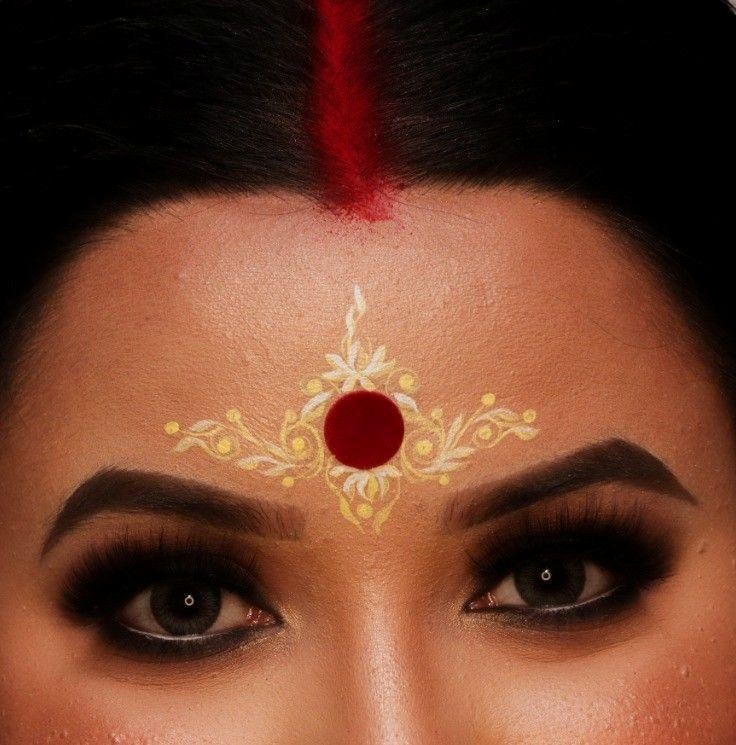
Within this framework, the teep is a component of the religious and familial ISAs that promote the notion that a woman’s primary role is as a wife and mother. The teep becomes a marker of her submission to patriarchal norms. It identifies her primarily in relation to her husband. Unmarried or widowed women are typically expected to remove the teep, highlighting how this symbol functions within a patriarchal system to categorise women as either protected by a man (if married) or outside conventional roles (if widowed or single). This use of the teep as a means of regulating gender illustrates how patriarchal beliefs are perpetuated through cultural symbols that may appear harmless but reinforce societal expectations regarding a woman’s role.
Can the teep be reclaimed?
A simple reclamation of a heavily hegemonic cultural artefact is quite difficult.
In recent years, the teep has been embraced by feminist and LGBTQ+ movements as a symbol of resistance and self-expression. Feminist activists have worked to challenge the traditional view of the teep as merely a marker of marriage and religious duty, instead promoting it as a sign of autonomy and empowerment. By wearing the teep on their terms, people reject the notion that it represents submission to patriarchy, using it instead to assert their independence and individuality. For those in the LGBTQ+ community, the teep has also been adopted as a symbol of gender fluidity and queer identity. By wearing this traditionally gendered symbol in ways that defy heteronormative expectations, individuals challenge the binary gender roles upheld by patriarchal society.
This ‘reclamation’ of the teep as a representation of gender non-conformity and queerness contests the ideological and cultural systems that have historically used the teep to enforce gender and sexual norms. This re-signification of the teep aligns with Althusser’s idea that ideology is not static but can be challenged. As feminists and LGBTQ+ activists repurpose the teep for their own ends, they confront the dominant ideologies and cultural norms that have historically limited its meaning, transforming it into a powerful symbol of resistance.
However, the over-arching understanding of the cultural artefact is not completely forgotten through the reclamation. Although the reclamation of the bindi shows how cultural symbols can be debated and redefined, reclaiming it does not completely forget the hegemonic representations and interpretations of the cultural symbol. The bindi/teep/bottu becomes a focal point of both cultural influence and resistance thus reflecting larger struggles for identity, freedom, and social change in modern India.
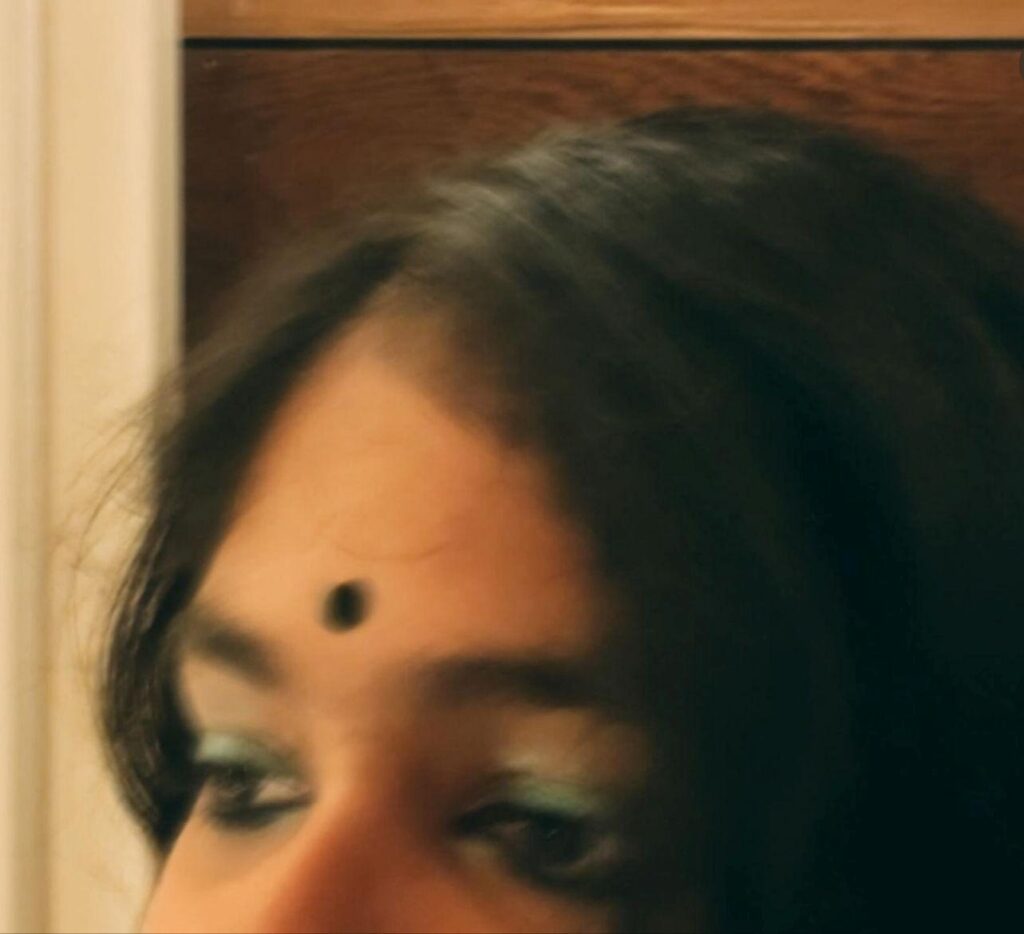
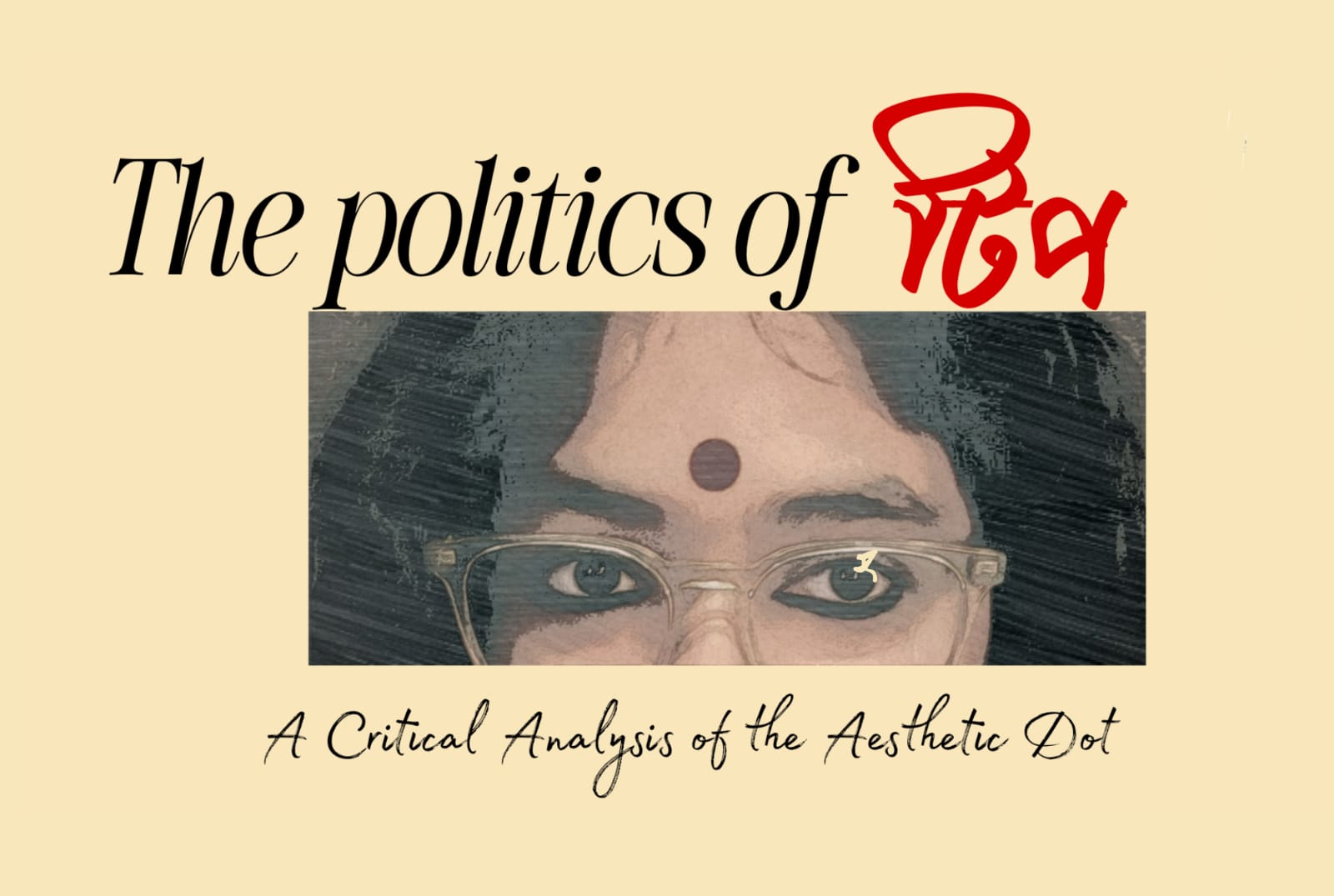
The above picture is of me wearing a teep. Wearing a teep, for me, is like second nature. It’s something I never forget to wear. It’s something that has become a part of my personality. It’s something I feel powerful in. What does that say about my Politics?